What Is a Cottage Food Law? A Plain Definition (2026)
The plain definition, what the laws cover and why the answer changes at every state line.
A cottage food law lets you make certain foods in your own home kitchen and sell them to the public, without renting a commercial kitchen or holding a full food establishment license. Every US state and the District of Columbia has one. The laws exist so a home baker or a jam maker can sell at a market or online without the cost of a licensed facility, while the state keeps a light set of rules around safety and labeling.
What counts as a cottage food
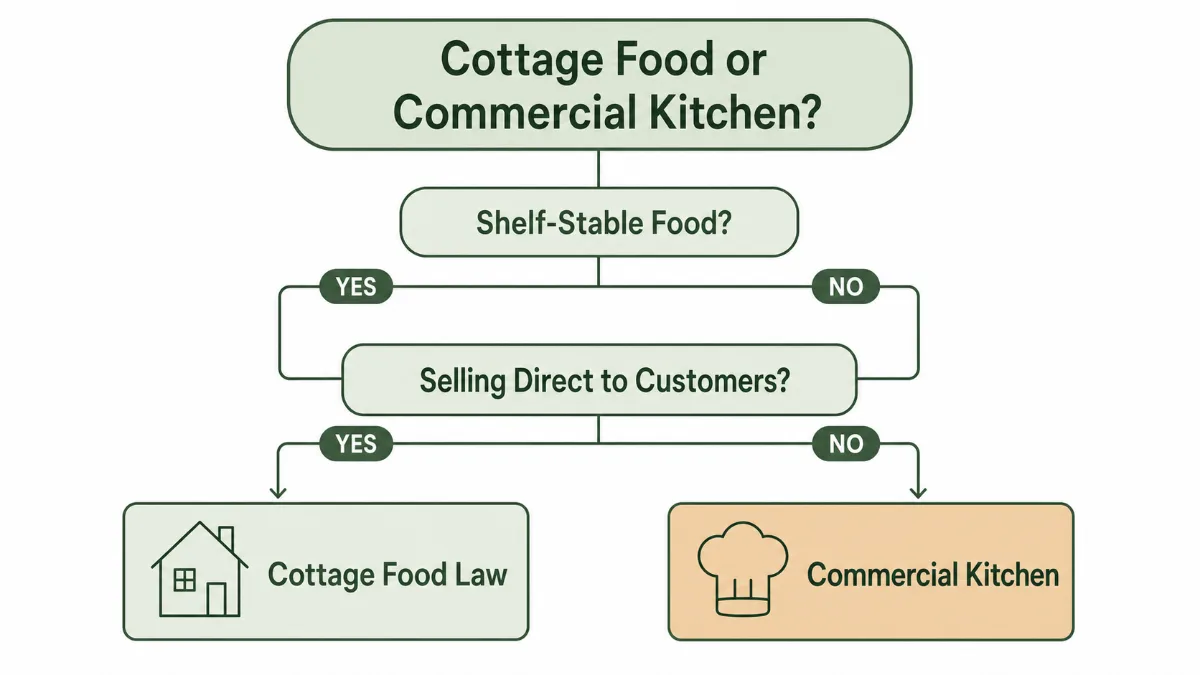
Most states center their law on shelf-stable foods, the ones that do not need refrigeration to stay safe. Baked goods, jams and jellies, candy, granola, dried herbs and spice mixes and dry baking mixes are allowed almost everywhere. A growing number of states now also allow some refrigerated foods, usually with an extra registration or a production-date label line. Meat, poultry, seafood, low-acid canned goods and most dairy stay prohibited in the large majority of states.
Why the answer changes at every state line
Each state decides four things for itself: which foods qualify, how much you can earn in a year, what your label must say and where you are allowed to sell. That is why the correct answer in one state can be wrong one border over. Sales caps alone run from $9,000 in one state to $250,000 in another. In 26 jurisdictions there is no dollar cap at all. Seventeen require no state registration, while a few ask for several steps before your first sale.
What a cottage food law does not cover
Cottage food laws are for home kitchens selling directly to the public, mostly within the state. They do not turn your kitchen into a licensed commercial facility. They also rarely cover wholesale to distributors or interstate shipping, though a few states have started to open those channels. When your volume outgrows the cap or you want to sell the prohibited foods, the next step is usually a licensed kitchen, which sits outside cottage food law.
See your own state's rules
Pick your state for the exact permit rules, the sales cap, the label wording and where you can sell, each cited to the statute or agency and dated. Or read how to start, step by step.
This page is educational information, not legal advice. Confirm the current rules with your state and county before you sell.
Cottage food FAQ
What does cottage food mean?
Cottage food is food made in a private home kitchen and sold to the public under a state cottage food law, without a commercial kitchen or a full food establishment license. Each state sets which foods qualify.
Is it legal to sell food made at home?
Yes. Every US state and the District of Columbia has a cottage food law that lets you sell certain homemade foods without a commercial kitchen. What you can sell, how much you can earn and whether you register first all depend on your state, so the legal answer is yes within your state's own rules.
What is a cottage food license?
It is the permission a state gives you to sell homemade food, though the name varies. Some states issue an actual license or permit, many use a free or low-cost registration and seventeen jurisdictions require nothing at all before you start. If you searched for a "cottage food license," your state may really call it a registration or a permit. Your state page names the exact one.
What states have cottage food laws?
All of them. Every US state and the District of Columbia has a cottage food law, so there are 51 sets of rules in total. They differ widely on allowed foods, sales caps and labeling, which is why this library keeps a separate page for each one.
Is cottage food the same in every state?
No. Every state has its own cottage food law. Which foods qualify, the sales cap, the label wording, the training and inspection rules and where you can sell all change from state to state.
What foods are usually allowed?
Shelf-stable foods that do not need refrigeration for safety: baked goods, jams and jellies, candy, granola, dried mixes and similar items. Meat, seafood, low-acid canned goods and most dairy are prohibited in most states.