Cottage Food Pricing Calculator
Turn your batch cost and kitchen time into a price you can defend.
How to use it
Enter your batch cost, units and kitchen time.
Ingredient cost and batch units are the only required fields.
Choose your margin multiplier and where you sell.
2.5x is the default. Try 2x, 3x or your own number.
Watch your price and break-even floor update instantly.
Nothing you type is sent anywhere or stored.
Price one unit
Enter the figures for one normal batch. Required fields are marked.
Your pricing summary
| Materials per unit | $0.00 |
|---|---|
| Your time per unit | $0.00 |
| Break-even per unit | $0.00 |
| Price at your multiplier | $0.00 |
| Margin per unit at that price | $0.00 |
| Margin as a percentage | 0.00% |
Use the break-even figure as your floor. The multiplier price sits below what this batch costs you once your time is counted.
Your time is not included yet. This price currently pays nothing for your time because the hours or hourly value is zero.
A starting price band
Farmers market view
Check your sales cap before you settle on volume. Several states cap annual cottage sales. Treat the cap as a pricing input rather than an afterthought. Your state page carries the figure to confirm.
If nothing opened, your in-app browser may block printing. Tap the compass or share icon to open this page in Safari or Chrome, then print or save as PDF.
Get your state's free cottage food checklist
You have a price. Your state's rules are the other half. Pick your state and the one-page checklist arrives in your inbox, the whole path in order.
Your figures stay in your browser. Only your email address and the state you pick are sent. Instant download, plus law-change alerts for your state. Unsubscribe anytime.
Turn the cost of one batch and the value of your kitchen time into a price you can explain. The calculator shows your break-even floor, a common starting band and the extra cost of the channel where you sell.
The four-step method
Start with one batch
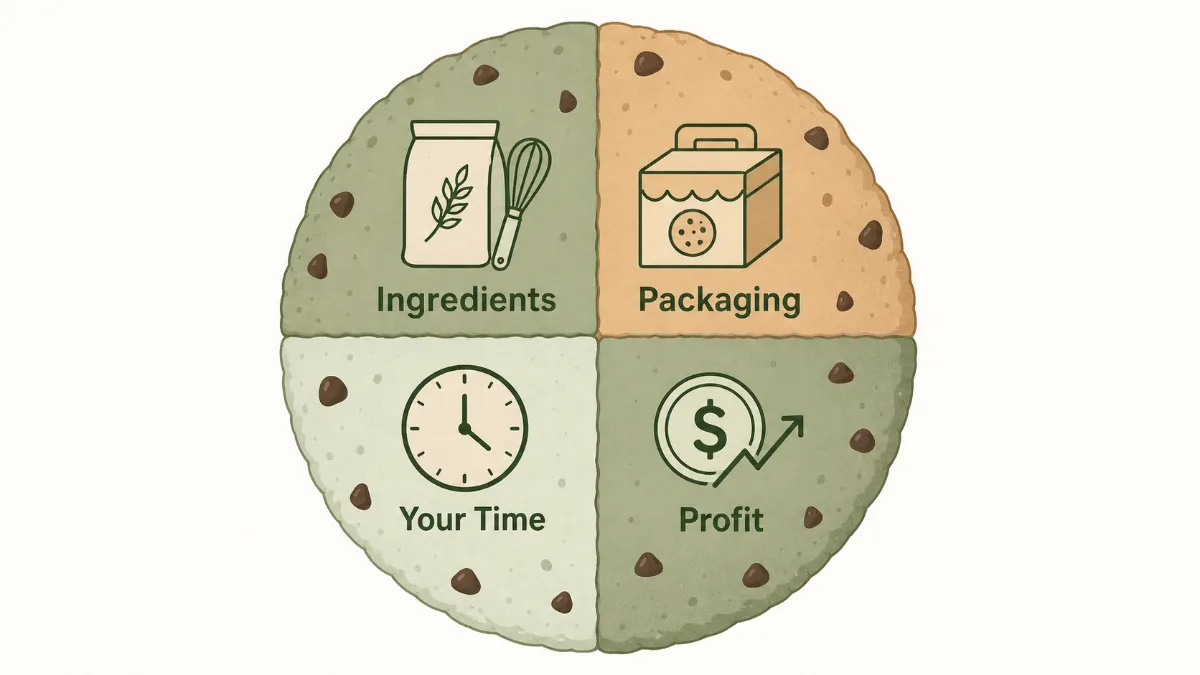
Add every ingredient, package and label. Divide the batch total by the number of units it makes. This gives you the materials cost per unit.
Count your time
Include shopping, prep, baking, cooling, packaging and cleanup. Put an hourly value on that work then spread it across the batch.
Add a margin
Two to three times the ingredient and packaging cost is a common starting point for shelf-stable baked goods. It is not a rule. Check the result against similar products at your market.
Price each channel
A market table adds a booth cost. An online listing adds platform and payment fees. The same product can carry a different price in each place.
From the team behind this library
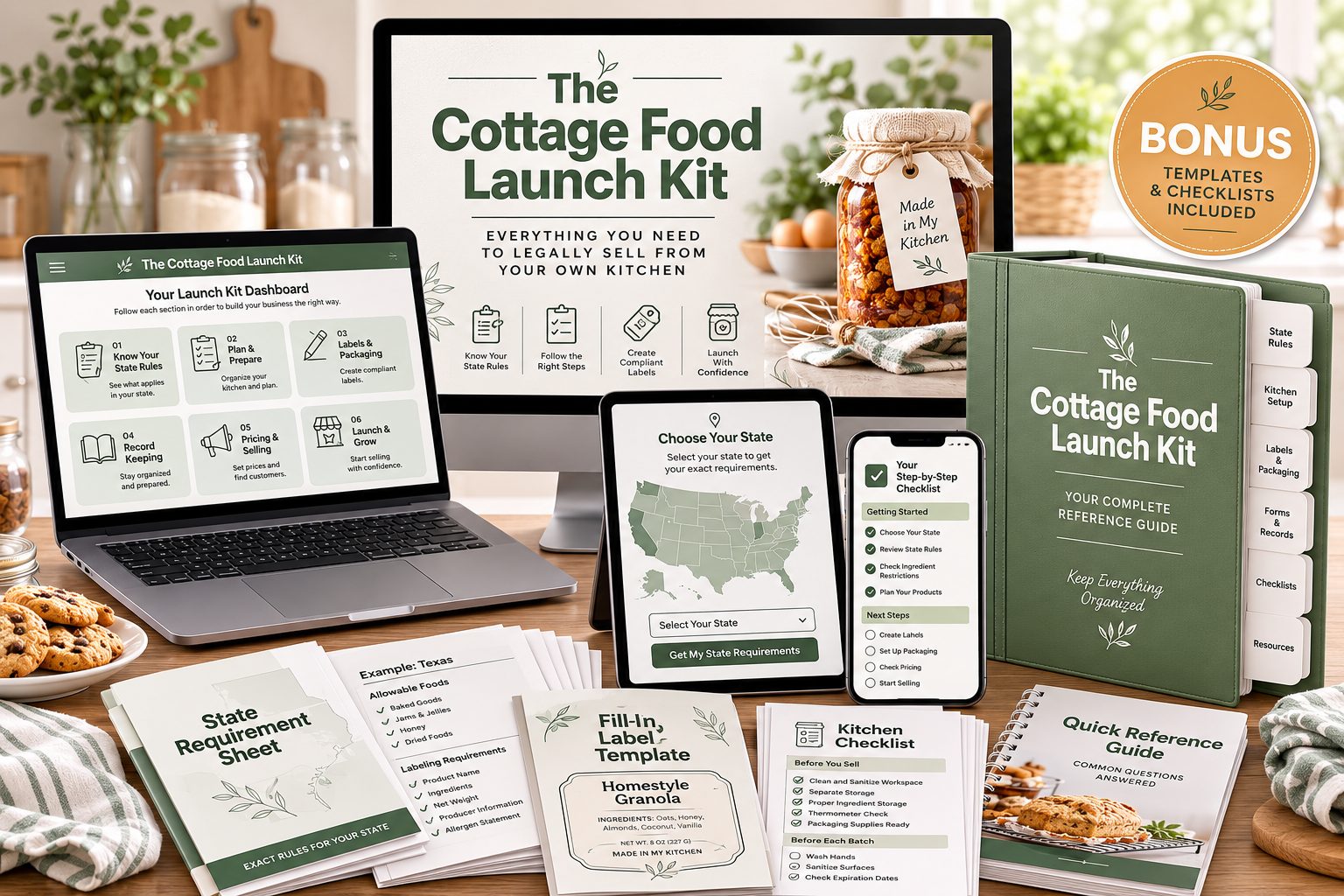
The Cottage Food Launch Kit
Your price is your decision. The rules are the part that has to be right. The Cottage Food Launch Kit turns your state's rules into one ordered walkthrough: your state requirement sheet, a fill-in label template with the exact required wording, the allowed-foods checker, the ordered checklist and your first-market plan. Follow it in an evening.
Worked example
This example is separate from the calculator. The inputs above stay empty until you add your own figures.
| Example input | Figure |
|---|---|
| Batch size | 24 units |
| Ingredients | $18.00 |
| Packaging and labels | $4.00 |
| Time | 2 hours at $20.00 per hour |
| Materials per unit | $0.92 |
| Time per unit | $1.67 |
| Break-even per unit | $2.58 |
| Price at 2.5x materials | $2.29 |
The $2.29 multiplier price falls below the $2.58 break-even floor once time is counted. This batch needs the break-even figure as its floor.
This calculator sets your price. Your state page sets your rules. Open your state for the free cottage food checklist, the one-page map of the steps in order, so you can see the whole path at a glance. The reference stays free.
Pricing questions
How do you price homemade food?
Add every ingredient, package and label used for one batch. Divide that total by the number of units. Add the value of your time per unit then add a margin. Check the result against similar products at your own market before you set the price.
How much should I charge for cookies at a farmers market?
Start with your materials and time per cookie. Add the booth fee divided by the number of units you expect to sell. A market booth typically costs $20 to $75 for a day though each market sets its own price. Use your own booth fee in the calculator and compare the result with similar products at that market.
Should my online price be the same as my market price?
It can differ. A market price needs to absorb the booth cost. An online listing needs to absorb platform and payment fees. Shipping belongs on its own line so you can see it clearly. Price each channel from the costs that channel creates.
Does this calculator tell me if my business will be profitable?
No. It prices one unit from the numbers you enter. Whether the work pays depends on your pricing, volume and costs. Your state's annual sales cap also affects the room you have to sell. The library promises no income figure.
Where do these numbers come from?
The figures come from what you type into the calculator. The two-times to three-times materials range comes from the method in the library's pricing guide. It is a common starting point for shelf-stable baked goods rather than a rule. Check it against your own market.
This calculator is educational information, not legal advice or financial advice. It does not come from a state agency. It prices only the numbers you type in and it promises no income. Ingredient costs, market rates and your state's annual sales cap all change what a workable price looks like, so confirm your own costs and your state's rules before you set prices.