Connecticut Cottage Food Law (2026): Rules, Limits and How to Start
Do you need a license to sell homemade food in Connecticut?
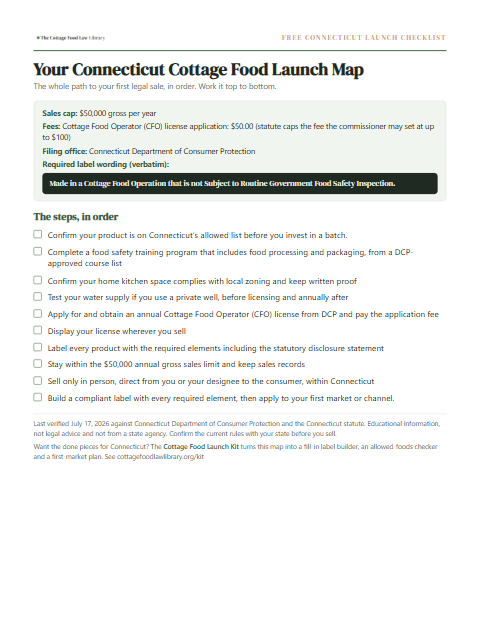
Connecticut requires you to get an annual Cottage Food Operator license from the Department of Consumer Protection before you sell anything, including a food safety course, a premises check and a $50 application fee. Sales are capped at $50,000 a year, must happen person-to-person inside Connecticut and cannot go through a store, restaurant or shipping carrier.
To sell homemade food in Connecticut you first register with Connecticut Department of Consumer Protection. The kitchen stays your own. Foods like loaf breads, rolls and biscuits and brownies are on the table once the registration and the label are done, in the order the page below lays out.
Connecticut caps annual cottage food sales at $50,000 gross per year. Public Act 22-8 (Senate Bill 187), effective October 1, 2022, doubled the cap from $25,000 to $50,000.
The parts new Connecticut sellers most often get wrong are the exact label disclosure wording, the food safety course and the registration step. Each one has its own row below, with the official source beside it.
How much can you sell? The Connecticut sales cap
The annual sales limit for a Connecticut cottage food operation.
| Item | Connecticut rule |
|---|---|
| Annual sales cap | $50,000 gross per year |
| How it works | Public Act 22-8 (Senate Bill 187), effective October 1, 2022, doubled the cap from $25,000 to $50,000. The Department of Consumer Protection's cottage food guide booklet still on its site at verification listed the older $25,000 figure, which is superseded by the statute; this file uses the current $50,000 statutory figure. |
What foods can you sell in Connecticut?
Allowed and prohibited categories under current Connecticut law.
| Allowed (examples) | Prohibited |
|---|---|
| Loaf breads, rolls and biscuits (plain, unstuffed); Non-potentially hazardous cakes including celebration cakes (not cheesecake); Non-potentially hazardous pastries and cookies; Brownies; Cake pops; Candies and confections, including cotton candy and hard candy; Chocolates; Fudge; Freeze dried candy; Fruit pies (not pumpkin); Jams, jellies and preserves meeting the federal Standard of Identity (21 CFR 150); Dried fruits and fruit leathers; Dehydrated fruits and vegetables; Freeze dried fruits and vegetables; Dehydrated sourdough starter; Dry herbs, seasonings and mixtures; Non-potentially hazardous cereals, trail mixes and granola; Coated or uncoated nuts; Vinegar and flavored vinegars; Popcorn and popcorn balls; Dry tea and coffee; Dried pasta (no egg). | Acidified foods; Pickled vegetables; Hot sauce; Salsa; Relishes; Apple sauce; Infused oils; Whipped cream, cream cheese and buttercream frostings; Cheesecake and custard-filled pastries; Flan and tres leches cakes; Ice cream; Soups; Syrups and extracts; Elderberry syrup and fire ciders; Chocolate covered fruit and candy or caramel covered fruit; Pepper jams and mango jams; Fruit butters (apple butter, pumpkin butter); Meat and poultry, including dehydrated forms like jerky; Any beverage; Fresh fruit or vegetables; Home-canned products other than jams and jellies meeting 21 CFR 150. |
Connecticut cottage food label requirements
Every package you sell needs a label with the elements below in legible print.
- Name and physical address of the cottage food operation (no P.O. box)
- Name of the cottage food product
- Ingredients in descending order of predominance by weight, with sub-ingredients of any prepared component listed out
- Net weight or net volume, including the metric equivalent
- Federal allergen labeling (milk, eggs, wheat, peanuts, soybeans, fish/shellfish, tree nuts, identifying the specific tree nut used)
- The disclosure statement above, in at least 10-point type, clear and conspicuous
- For unpackaged specialty items like wedding cakes, all label information on the accompanying invoice
Connecticut requires this disclosure statement, word for word:
Made in a Cottage Food Operation that is not Subject to Routine Government Food Safety Inspection.
Reproduced from Connecticut's cottage food labeling requirements. Confirm the current wording with Connecticut Department of Consumer Protection before you print a run of labels.
From the team behind this library
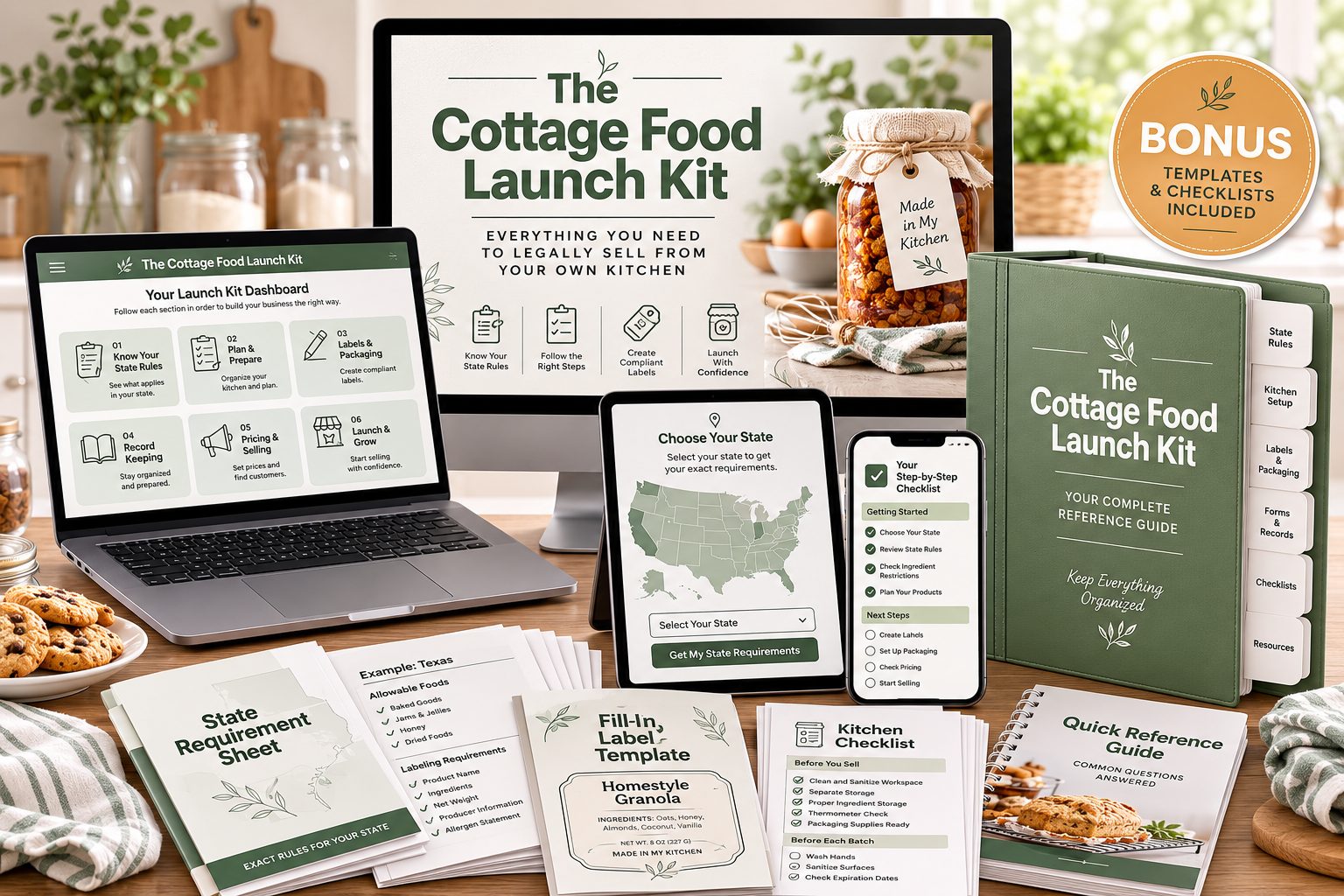
The Cottage Food Launch Kit
Want the whole path in one place? The kit turns everything on this page into one ordered walkthrough for Connecticut: your state requirement sheet, a fill-in label template with the exact required wording, the allowed-foods checker, the ordered checklist and your first-market plan. Follow it in an evening.
Where can you sell in Connecticut?
The venues and channels Connecticut cottage food operators may use.
| Channel | Allowed in Connecticut? |
|---|---|
| Direct in-person sale at home, farmers markets, fairs and festivals | Yes. Some farmers markets or venues may separately require their own food establishment license |
| Online advertising and order-taking | Yes. The sale and delivery must still be an in-person, person-to-person transaction within Connecticut |
| Shipping by mail or third-party carrier (UPS, FedEx, mobile food ordering apps) | No |
| Wholesale, consignment, or sale to a broker/distributor for resale | No |
| Grocery stores, restaurants, long-term care facilities, group homes, day cares or schools | No |
| Free samples | With conditions. Subject to local health department approval |
Registration, training and inspection
Registration and permits. Every cottage food operation must be licensed annually by the DCP Commissioner. Licensing requires a completed application, the fee, proof of the food safety course, zoning compliance documentation and, if applicable, a water test.
Food safety training. Applicants must complete a food safety training program that includes training in food processing and packaging, from DCP's list of acceptable courses, before receiving a license.
Kitchen inspection. Prior to licensing, the commissioner examines the premises of the cottage food operation for compliance. This is a pre-licensing check rather than the routine ongoing inspection a licensed food establishment receives; the cottage food label statement specifically notes the product is 'not subject to routine government food safety inspection.'
The fees a Connecticut cottage food seller can expect.
| Item | Cost |
|---|---|
| Cottage Food Operator (CFO) license application | $50.00 (statute caps the fee the commissioner may set at up to $100) |
Wondering how Connecticut compares? See what a cottage food license costs in every state, from the no-fee states to the priciest permits.