Kentucky Cottage Food Law (2026): Rules, Limits and How to Start
Do you need a license to sell homemade food in Kentucky?
Kentucky runs two registered programs under the Cabinet for Health and Family Services. The Home-Based Processor path covers non-hazardous foods like baked goods, jams and candy, plus pork lard and tallow-based cosmetic products since July 15 2026, for a $50 annual registration fee. The Home-Based Microprocessor path adds low-acid canned goods and salsas and requires a University of Kentucky workshop plus recipe approval. Either way, the $60,000 gross-income limit is written into the statutory definition of the path you register under.
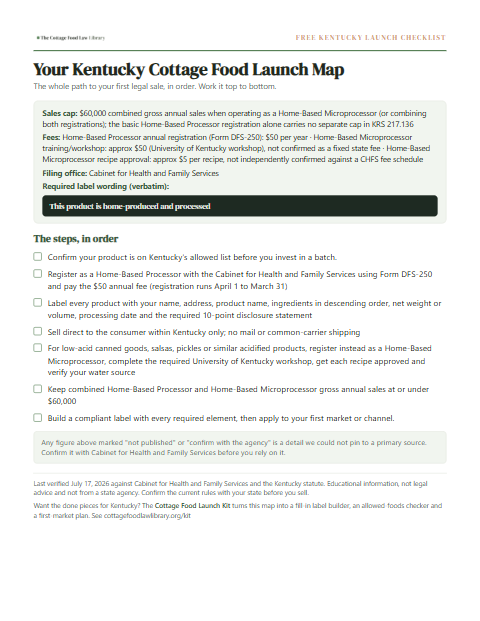
To sell homemade food in Kentucky you first register with Cabinet for Health and Family Services. The kitchen stays your own. Foods like baked goods and jams and jellies are on the table once the registration and the label are done, in the order the page below lays out.
Kentucky caps annual cottage food sales at $60,000 gross income a year from the sale of the products, written into the statutory definition of BOTH paths. Read verbatim from KRS 217.015 on the Kentucky Legislature site.
a 2026 amendment to KRS 217.136 was enacted in July 15, 2026. The home-based processor statute KRS 217.136 was amended with an effective date of July 15, 2026. We caught the new date during a July 2026 primary-source pass and are re-reading the amended text for substance. The $60,000 income limit lives in the statutory definitions at KRS 217.015 and held at our July 27, 2026 read. This page reflects the rule in force today; the full history sits in the law-updates log.
How much can you sell? The Kentucky sales cap
The annual sales limit for a Kentucky cottage food operation.
| Item | Kentucky rule |
|---|---|
| Annual sales cap | $60,000 gross income a year from the sale of the products, written into the statutory definition of BOTH paths (KRS 217.015(56) for a home-based processor, KRS 217.015(57) for a home-based microprocessor) |
| How it works | Read verbatim from KRS 217.015 on the Kentucky Legislature site. Definition (56), home-based processor: "...and who has a gross income of no more than sixty thousand dollars ($60,000) annually from the sale of the products". Definition (57), home-based microprocessor: the same $60,000 language. The limit is therefore an eligibility condition on each definition separately. It is not a combined cap across both registrations and it is not confined to the microprocessor path. CORRECTION 2026-07-27: this page previously described the $60,000 as a combined cap and said the basic home-based processor path had no cap of its own. Both statements were wrong. Neither KRS 217.136 nor KRS 217.137 states a figure, which is what the earlier pass was looking at. |
What foods can you sell in Kentucky?
Allowed and prohibited categories under current Kentucky law.
| Allowed (examples) | Prohibited |
|---|---|
| Baked goods; Jams and jellies; Candy; Dried items; Home-Based Microprocessor path adds: non-fruit or low-sugar jams/jellies, acidified food products, low-acid canned foods (canned tomatoes, green beans, salsa, barbecue sauce, pickles, chutney); Pork lard or tallow-based cosmetic products, added to the home-based processor path by 2026 Ky. Acts ch. 52 (SB 73), effective July 15, 2026. | Acid foods, acidified foods, formulated acid foods and low-acid canned foods under the basic Home-Based Processor registration (these require the separate Home-Based Microprocessor registration instead); BOTH PATHS, per 902 KAR 45:090 Section 2(3): creme filled pies; custard; custard pies; pies with meringue topping; cheesecake; cream, custard or meringue pastries; raw seed sprouts; garlic-in-oil products; and pureed baby foods; Vacuum packaging of food in any container other than a mason-type jar (Section 2(4)). |
Kentucky cottage food label requirements
Every package you sell needs a label with the elements below in legible print.
- Name and address of the operation
- Product name
- Ingredients in descending order
- Net weight or volume
- Processing date
- The disclosure statement above, in 10-point type
Kentucky requires this disclosure statement, word for word:
This product is home-produced and processed
Reproduced from Kentucky's cottage food labeling requirements. Confirm the current wording with Cabinet for Health and Family Services before you print a run of labels.
From the team behind this library
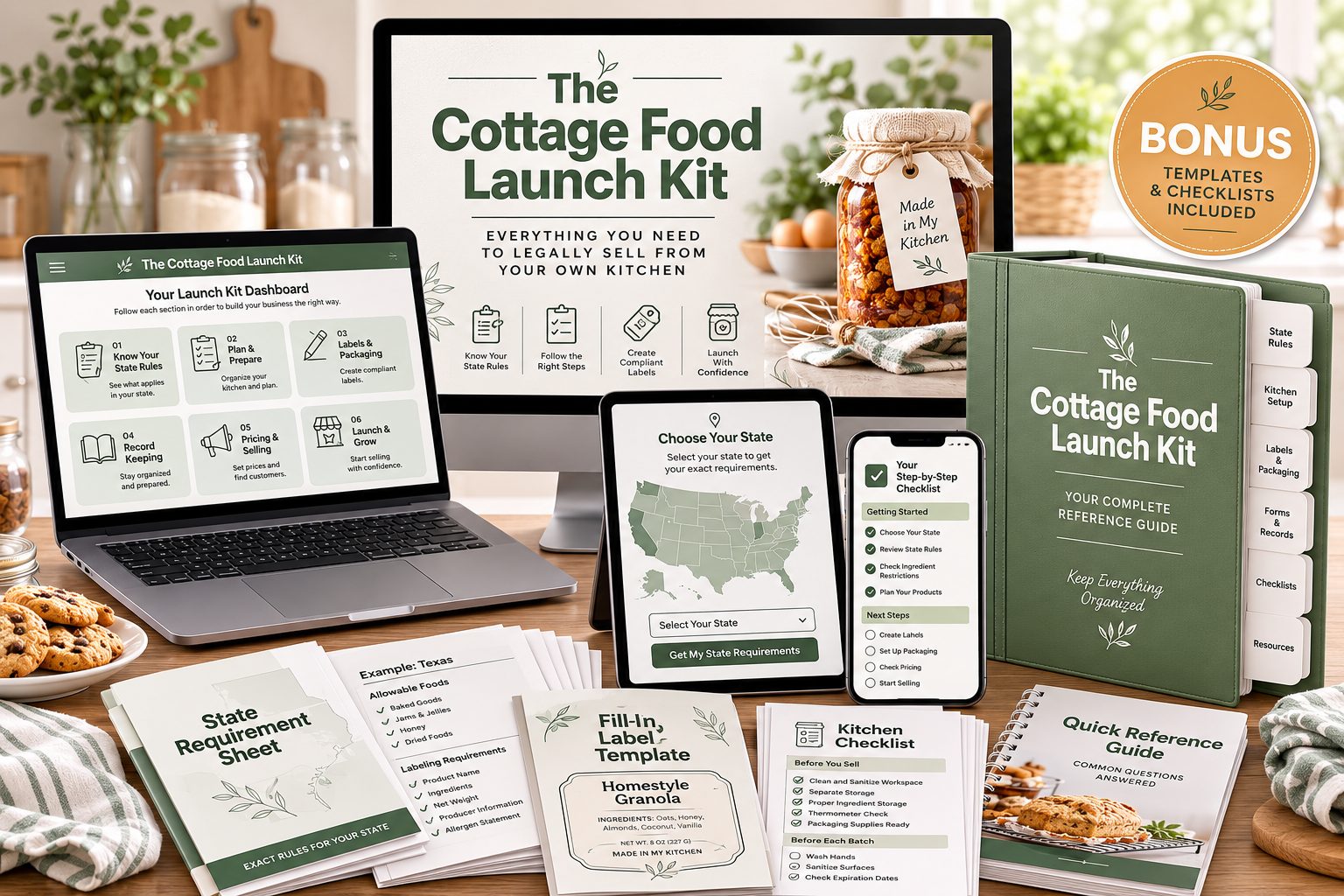
The Cottage Food Launch Kit
Want the whole path in one place? The kit turns everything on this page into one ordered walkthrough for Kentucky: your state requirement sheet, a fill-in label template with the exact required wording, the allowed-foods checker, the ordered checklist and your first-market plan. Follow it in an evening.
Where can you sell in Kentucky?
The venues and channels Kentucky cottage food operators may use.
| Channel | Allowed in Kentucky? |
|---|---|
| Home pickup or delivery, farmers markets, roadside stands, community events | Yes |
| Online orders | Yes. Must be fulfilled by in-state pickup or personal delivery. |
| Mail or common-carrier shipping | No |
| Home-Based Microprocessor products sold on-farm, at farmers markets or certified roadside stands | Yes. Per secondary sources; Microprocessor sales venues are more restricted than the basic Home-Based Processor path. |
Registration, training and inspection
Registration and permits. Home-Based Processor registration with CHFS (Form DFS-250, $50 annual fee) is required, mandatory since January 1, 2020. Acidified or low-acid canned products require the separate Home-Based Microprocessor registration.
Food safety training. No separate training course for the basic Home-Based Processor registration. The Home-Based Microprocessor path requires a University of Kentucky Cooperative Extension workshop and individual recipe approval.
Kitchen inspection. The Cabinet may conduct annual inspections and must inspect on a complaint or evidence of misbranding or adulteration. Production may be halted for an imminent health hazard.
The fees a Kentucky cottage food seller can expect.
| Item | Cost |
|---|---|
| Home-Based Processor annual registration (Form DFS-250) | $50 per year |
| Home-Based Microprocessor certification (annual) | $50 a year |
| Home-Based Microprocessor recipe approval | approx $5 per recipe, not independently confirmed against a CHFS fee schedule |
Not published centrally. Confirm the current amount with Cabinet for Health and Family Services.
Wondering how Kentucky compares? See what a cottage food license costs in every state, from the no-fee states to the priciest permits.